

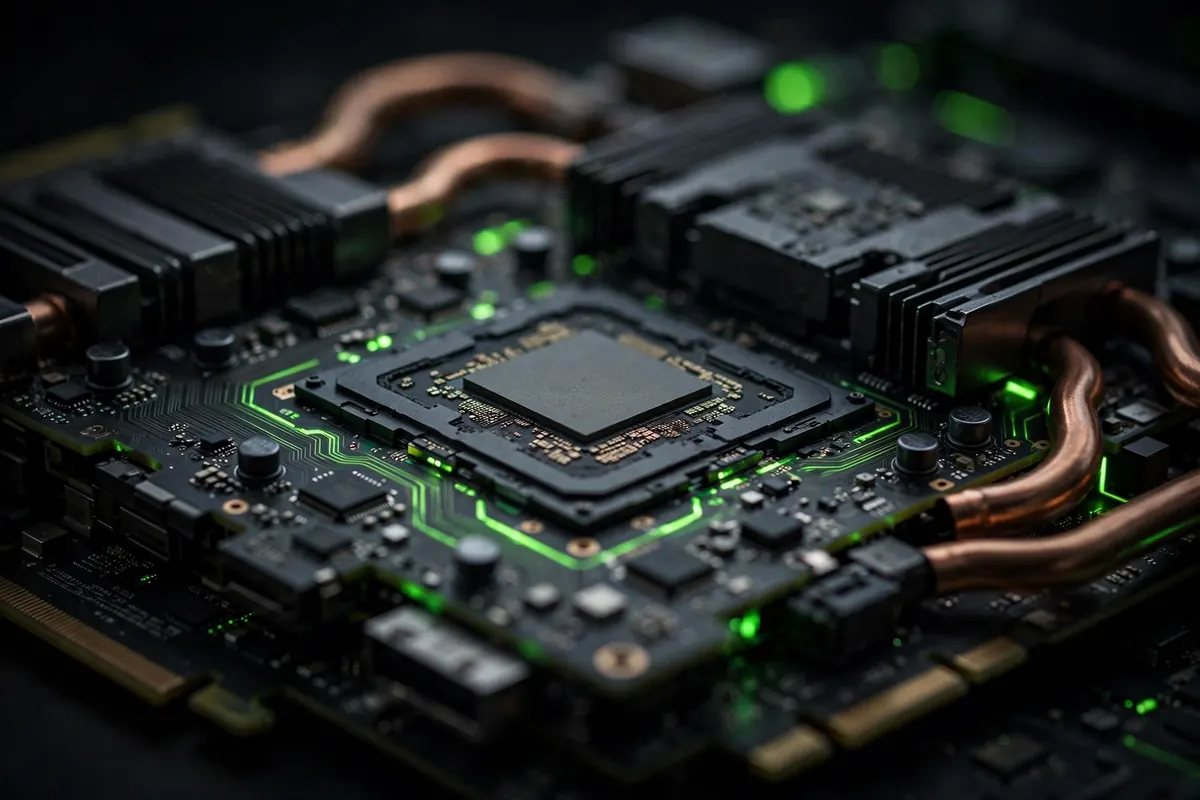
NVIDIA Is Reportedly Killing the RTX 5090 — and AI Is the Reason
The RTX 5090 discontinued rumors are getting hard to ignore. Multiple hardware leakers now claim NVIDIA has halted production of its flagship gaming GPU — the fastest graphics card money could buy — to redirect its precious GB202 silicon toward AI data centers and professional workstations. If you’ve been saving up for a 5090, I’ve got good news and bad news. The bad news first: your window is closing.
What Actually Happened
Let’s separate fact from rumor, because this story deserves honesty. NVIDIA has not officially confirmed anything. What we have are reports from hardware leakers @hongxing2020 and @ZedWang, who shared what they describe as a factory notice stating NVIDIA will no longer manufacture any RTX 5090 models — including the China-market D variants. Tom’s Hardware, VideoCardz, and Wccftech have all picked up the story within the last day, and Tom’s Hardware says NVIDIA hasn’t responded to requests for comment — which, for NVIDIA, is standard operating procedure on rumors.
Here’s what makes me take this one seriously: the economics are brutally logical. The RTX 5090 launched in January 2025 at $1,999 with 32GB of GDDR7 memory. The exact same GB202 chip also powers NVIDIA’s RTX PRO 6000 — a 96GB card aimed at AI and professional visualization that sells for around $15,000. Same silicon, seven times the price. When you’re NVIDIA and every GB202 die can either become a $2,000 gaming card or a $15,000 AI accelerator, the math makes the decision for you.
Why AI Pays More Than Gamers
This is the part most coverage glosses over, so let me spell it out. The AI boom didn’t just make NVIDIA rich — it fundamentally rewired who the company’s real customers are. Gamers built NVIDIA, but AI data centers now pay its bills. Every quarter, the data center segment posts numbers that make the gaming division look like a side hustle.
The GB202 is an enormous chip — 92 billion transistors — which means yields and wafer allocation actually matter. Fabs can’t just print infinite silicon. Every wafer that becomes RTX 5090s is a wafer that didn’t become RTX PRO cards for customers who’ll pay workstation prices without blinking. And here’s the kicker: so many AI customers were buying RTX 5090s instead of the PRO cards (better value for AI work) that the gaming flagship was literally cannibalizing NVIDIA’s own high-margin products. Killing the 5090 solves that problem overnight.
RTX 5090 vs RTX 5080: The New Flagship
If the RTX 5090 is really done, the RTX 5080 24GB becomes NVIDIA’s top consumer card by default. That’s a strange sentence to write — the 5080 was supposed to be the sensible high-end option, not the flagship. Early indications suggest it’ll outperform the RTX 4090 in rasterization while delivering comparable ray tracing, which honestly keeps it competitive. But there’s a real performance gap between it and the 5090’s 32GB frame buffer, and content creators working with massive scenes will feel it.
The 16GB RTX 5080 variant is reportedly being discontinued too, which tells you everything about where VRAM requirements are heading. In 2026, 16GB is the new minimum for serious work, not the sweet spot.
RTX 5090 Price in 2026: Expect It to Climb
Here’s my practical take, and I want to be straight with you: if you want a 5090, the time to buy was yesterday. US system integrator Stince Built warned just this week that GPU supply constraints are tightening and prices could climb “significantly.” GPUs are already up 50–60% year over year thanks to the memory shortage, and a discontinued flagship with dwindling inventory is a textbook recipe for price spikes. Retailers and board partners still hold stock, so cards won’t vanish tomorrow — but every week you wait, expect to pay more.
Don’t panic-buy from scalpers, though. Set price alerts, buy from reputable retailers, and never pay crypto-bro premiums in a Discord server. The card isn’t becoming unobtainium overnight.
The Bigger Picture: AI Is Eating the GPU Market
Zoom out and this story stops being about one graphics card. The RTX 5090’s reported fate is the clearest signal yet that the consumer GPU market now plays second fiddle to AI infrastructure. Memory manufacturers are prioritizing HBM for data centers over GDDR for gamers. Fabs are allocating leading-edge capacity to AI accelerators. Even the RTX PRO naming — quietly absorbing what used to be “Titan”-class halo products — shows where NVIDIA’s attention lives now.
I’m not saying PC gaming is dying; the RTX 5080 24GB will be a genuinely great card, and competition (whenever it shows up) keeps everyone honest. But the days of gamers getting first dibs on the best silicon are over. From here on, we get what’s left after the data centers eat.
Bottom Line
The RTX 5090 discontinued story is still technically a rumor — but it’s a rumor with supply-chain sources, same-day tech-press coverage, and economics that make complete sense. Treat it as likely true until NVIDIA says otherwise. If you’re building a high-end PC in 2026, plan around the RTX 5080 24GB as the ceiling, budget for rising GPU prices across the board, and remember: in the AI era, gamers are guests at NVIDIA’s table, not the hosts.