

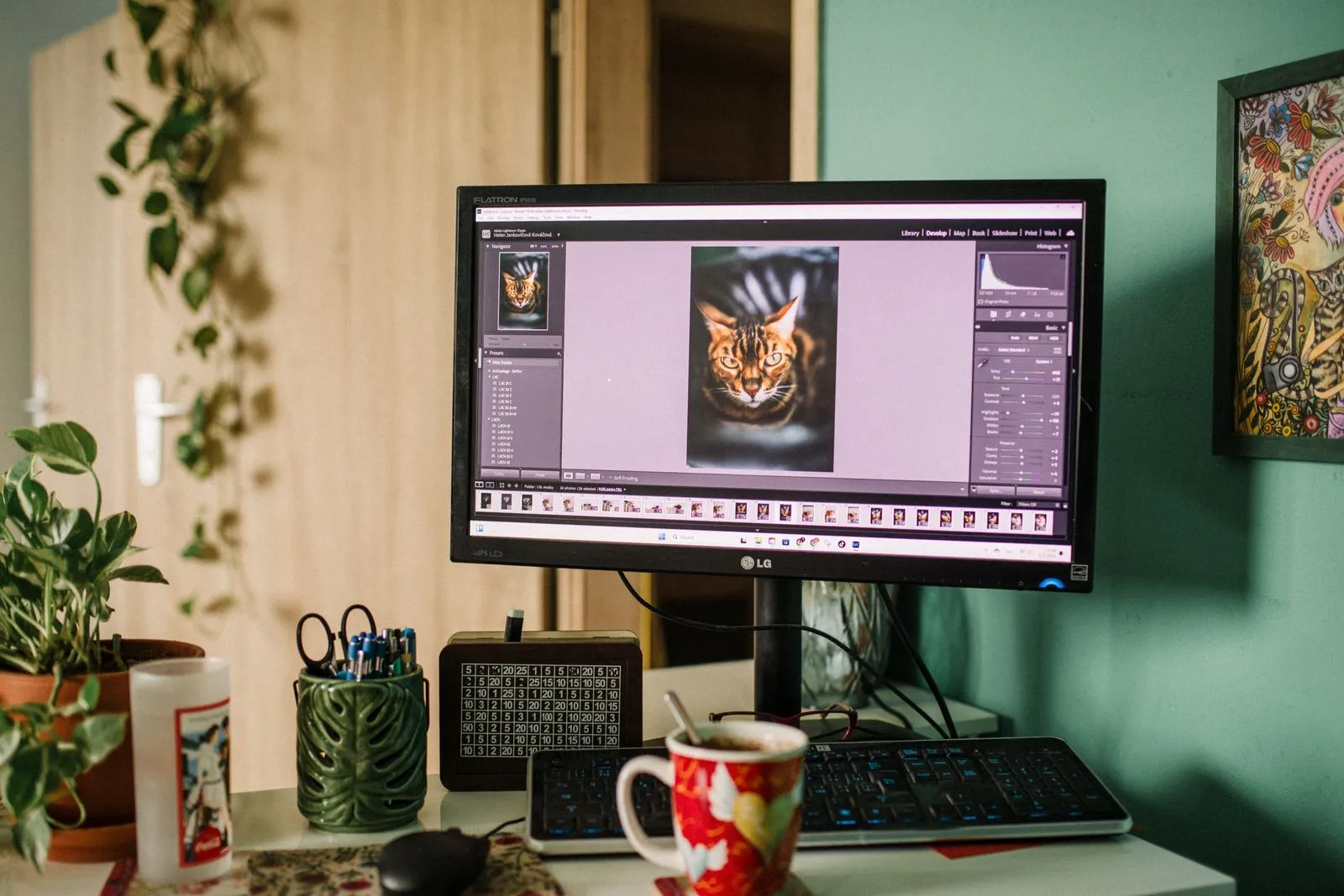
Photoshop costs $22.99 a month. That is $275.88 a year, every year, for a program most of us use to crop a photo, remove a background, and fix the lighting. If that sounds like a bad deal, it is – because five free alternatives to Photoshop now cover the parts of Photoshop most people actually use, and they cost exactly $0.
None of these is Photoshop, and if your job depends on its AI tools or print workflow, keep paying for it. But if you edit photos for a blog, a channel, a small business, or just for fun, one of these five will do the job and leave $276 a year in your pocket.
What Photoshop actually costs in 2026
Adobe sells Photoshop only as a subscription – there is no version you can buy once and keep. The $22.99 plan is a twelve-month contract, and cancelling early costs 50% of the remaining months.
| Plan | Price (US) | What you get |
|---|---|---|
| Photoshop single app | $22.99/month (annual plan, billed monthly) | Desktop, web and mobile, 100GB storage, 25 generative credits a month |
| Photoshop single app, month-to-month | $34.49/month | Same, but you can cancel any time |
| Photography plan | $19.99/month | Photoshop plus Lightroom and 1TB storage – the cheapest way to get Photoshop |
| Creative Cloud Pro | $69.99/month | Every Adobe app, unlimited standard generative features |
The 5 best free Photoshop alternatives at a glance
| Tool | Price | Runs on | Best for | Biggest catch |
|---|---|---|---|---|
| Photopea | Free (ads); about $5/month removes them | Any browser | PSD files, quick edits on any computer | Ads, no full CMYK workflow |
| Affinity | Free (needs a free Canva account) | Mac, Windows | Serious pro work, print, RAW editing | AI tools need a paid Canva plan |
| GIMP | Free, open source | Windows, Mac, Linux | Deep retouching, plugins, Linux users | Dated interface, steep learning curve |
| Pixlr | Free (ads, daily save cap); Plus from $1.99/month billed yearly | Browser, mobile, desktop | Fast edits, AI tools, phone editing | Ads, save cap, AI credits are metered |
| Canva | Free tier (Pro from $120/year) | Browser, mobile | Social graphics, thumbnails, templates | Not a real photo editor |
1. Photopea: the closest thing to Photoshop that costs nothing
Photopea is the first tool to try, and for most people it is the last one they will need. It runs entirely in a browser tab, needs no install and no account, and its interface and shortcuts deliberately mirror Photoshop’s. Photoshop users will feel at home in five minutes.
Its real trick is PSD compatibility: Photopea opens and saves native Photoshop files with layers, masks, smart objects and adjustment layers intact. A client sends you a layered PSD, you open it on a borrowed laptop, make the change, and send it back as a PSD. It also handles RAW files, SVG and PDF, and works offline once the page has loaded, because your files never leave your device.
Pros: genuinely free with no feature gating, no watermarks and no account; real PSD support; works on any machine with a browser. Cons: the free version shows ads; no full CMYK workflow for print; very large files hit the browser’s memory ceiling; AI tools lag far behind Photoshop’s Generative Fill.
Pick Photopea if: you need Photoshop-style editing occasionally or you deal with PSD files.
2. Affinity: the $70 pro app that is now free
This is the biggest plot twist in photo editing in years. Affinity used to cost $69.99 as a one-time purchase. Then on October 30, 2025, Canva folded Affinity Photo, Designer and Publisher into a single app called Affinity and made it completely free, forever. No stripped-back version, no watermark, no export limits.
What you get is the full professional package: the Pixel studio (the old Affinity Photo) for retouching and RAW development, the Vector studio for illustration, and the Layout studio for page design, all in one window. The catch is strategic: you need a free Canva account to activate it, and the AI tools only unlock with a paid Canva plan. If you never touch those, you never pay a cent.
Pros: a genuine professional editor for $0; no feature limits or watermarks; proper CMYK and RAW support. Cons: requires a Canva account; no AI tools without a paid plan; Mac and Windows only for now.
Pick Affinity if: you want a real desktop app for serious work – retouching, print, RAW photos.
3. GIMP: the free veteran that refuses to die
GIMP has been the default “free Photoshop alternative” since 1996: free, open source, on Windows, Mac and Linux, and able to do almost anything Photoshop can do. It has layers, masks, curves, healing tools, a huge plugin ecosystem, and it is scriptable.
The long-standing complaint was the interface, which ignored Photoshop conventions for two decades. GIMP 3.0, released in March 2025, finally modernized it, with better HiDPI support and non-destructive filters that stay editable. It is still not as slick as Photoshop or Affinity, but the gap is smaller than it has ever been.
Pros: completely free and open source, no account, no ads; enormous plugin library; the only serious option on Linux. Cons: the interface still takes getting used to; no native CMYK support; PSD support is good but not perfect; no built-in AI tools.
Pick GIMP if: you use Linux, or you want an open-source tool with no account and no strings attached.
4. Pixlr: the fastest way to edit a photo in a browser
Pixlr is the one I reach for when I need an edit done in two minutes. It is browser-based, with two editors – Pixlr Editor for layered work and Pixlr Express for quick fixes – plus mobile and desktop apps. Crop, layers, masks, filters, retouching, background removal and AI tools are all covered.
The free tier is genuinely usable: the full editing toolset works without paying, and exports have no watermark. The trade-offs are written on the tin. The free version shows ads, caps how many times you can save per day, and gives new users a small starter allowance of AI credits (about 20). Plus costs $1.99 a month billed yearly and removes the ads and the save cap; Premium is $7.99 a month billed yearly and adds 1,000 AI credits a month.
Pros: fast, no install, works on your phone; solid AI tools for quick jobs; the free tier covers the basics with no watermark. Cons: ads and a daily save cap on the free tier; AI features are metered by credits; no RAW support and a 10MB file cap on free uploads.
Pick Pixlr if: you edit photos for social media, you want quick AI tools like background removal, or you mostly edit on your phone. For a deeper dive into AI image tools, see our roundup of the best free AI image generators.
5. Canva: the template machine (with one honest warning)
Canva is on this list because millions of people use it as their Photoshop replacement, and for one specific job it genuinely is better than Photoshop: making a social media graphic, a YouTube thumbnail or a poster in ten minutes. The free tier has thousands of templates and a drag-and-drop editor, and it runs in a browser or on your phone.
The honest warning is that Canva is not a photo editor. There is no real layer-based editing, no curves, no masking in the Photoshop sense, and no RAW support. If you need to retouch a portrait properly, Canva will frustrate you. But if your actual job is “make this look good for Instagram by lunchtime,” Canva is faster than Photoshop at any price. We compared it head-to-head with Adobe’s own free design tool in our Canva vs Adobe Express comparison.
Pros: the fastest way to make a polished graphic; huge template library; free tier is generous. Cons: not a real photo editor; the best assets sit behind Pro ($120 a year).
Pick Canva if: your work is social graphics, thumbnails and posters rather than photo retouching.
Which free Photoshop alternative should you pick?
If you only remember one line from this article, make it this one: start with Photopea, and only move on if it cannot do something you need.
- You deal with PSD files or use shared computers: Photopea.
- You want a proper desktop app for serious work: Affinity.
- You use Linux or want open source with no account: GIMP.
- You want quick edits and AI tools on your phone: Pixlr.
- You mostly make social graphics: Canva.
One practical tip whatever you choose: once you have exported your edit, shrink the file before you upload it anywhere. A full-size PNG from any of these tools can be several megabytes. Our free Image Compressor does it in your browser – your photos never leave your device – and at 80% quality most images look identical at 60-80% smaller. And if you want AI help beyond photo editing, see our roundup of 10 AI tools that will save you hours every week.
Frequently asked questions
Is there a completely free version of Photoshop?
No. Adobe offers a 7-day free trial, and after that you need a paid plan starting at $22.99 a month. Photopea and Affinity cover most of what the average user does in Photoshop, for $0.
Is Affinity really free now?
Yes. Since October 30, 2025, Affinity is a single free app combining the old Affinity Photo, Designer and Publisher. You need a free Canva account to download and activate it, and only the AI tools inside it require a paid Canva plan.
Can free alternatives open PSD files?
Photopea opens and saves PSD files with layers, masks and smart objects intact. Affinity and GIMP also open PSD files, though some advanced Photoshop features may not translate perfectly. Canva and Pixlr are weaker here, so avoid them if PSD compatibility matters to you.
The bottom line
Photoshop earns its $22.99 a month if your work depends on its AI tools, its print workflow, or its ecosystem. For everyone else, that subscription is paying for features you will never open. Photopea handles the PSD files and the quick edits, Affinity handles the serious desktop work, and GIMP, Pixlr and Canva cover the rest. Try Photopea first – it takes thirty seconds to open in a browser – and keep the $276 a year.
[…] It’s not a real photo editor: editing is basic, and serious retouching needs another tool. For proper photo editing, see our guide to the best free alternatives to Photoshop. […]
[…] Where ChatGPT genuinely beats the field is editing. Upload a photo, tell it what to change — “turn this into a watercolor,” “put my dog in a spacesuit” — and it does it in the same conversation, keeping the rest of the image intact. It is also the strongest of the free options at rendering readable text inside an image, which is why so many viral “AI poster” trends start her.e If you need a dedicated photo editor rather than an AI generator, see our guide to the best free alternatives to Photoshop. […]