

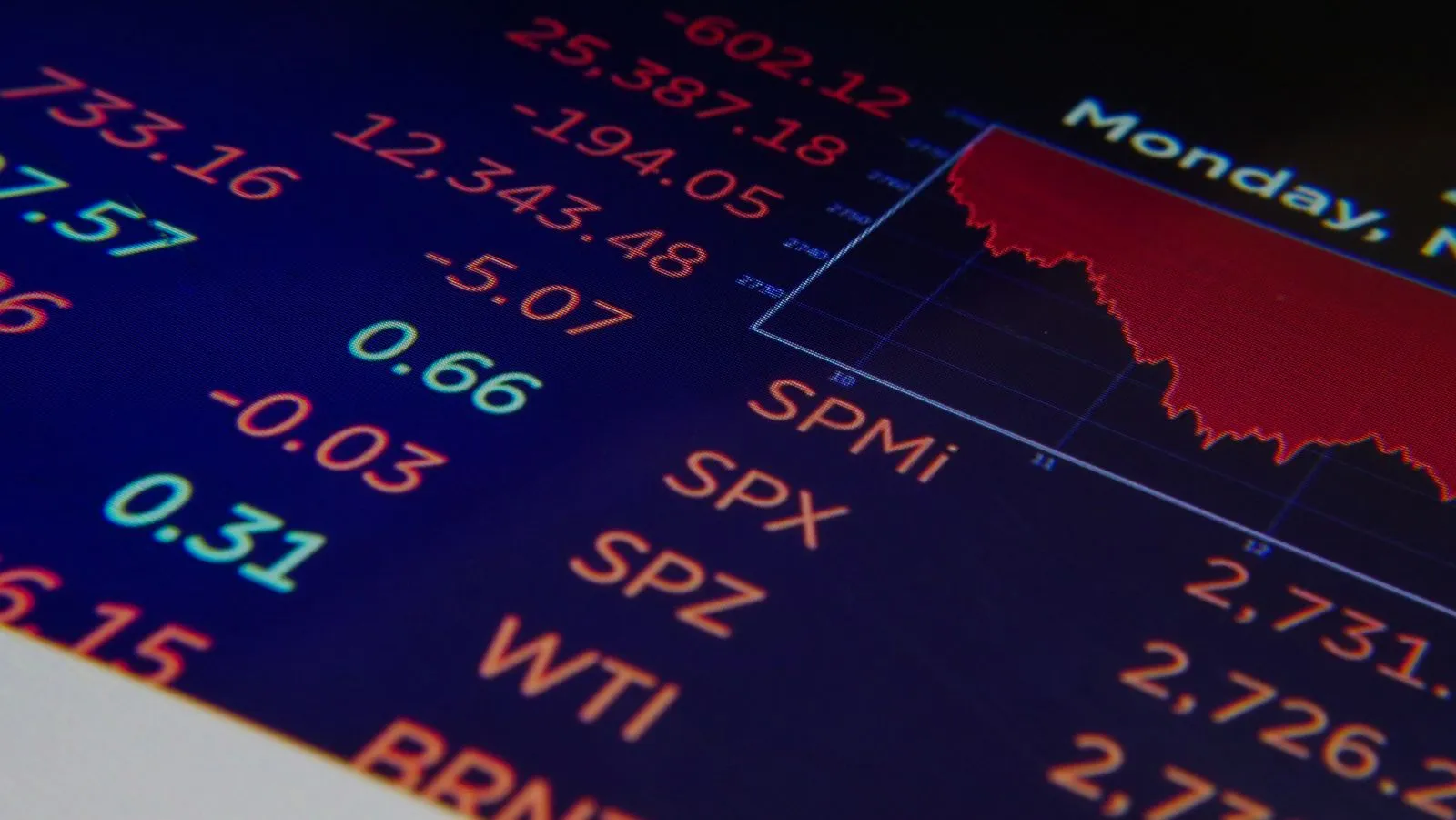
There is a special kind of irony in watching Alphabet‘s $500 billion loss happen because of the very thing Google spent years building. For two decades, Google’s search box printed money. Then Google taught its search box to answer questions directly, and on Thursday, October 29, 2026, investors decided that was a very expensive lesson. Alphabet’s shares fell about 12.6 percent in a single day, wiping roughly $500 billion off the company’s market value: the biggest one-day loss in Alphabet’s history, and its worst trading day since the company went public in 2004.
I run a website that lives and dies by Google traffic, so I read this story less like a stock-market spectator and more like a weather warning. When the company that sends most of your visitors admits its own AI is changing how search makes money, that is not just a finance story. It is about everyone downstream of the search box.
What actually happened on Thursday
Alphabet reported third-quarter results, and the headline numbers looked fine at first glance. Total revenue rose 25 percent to $127.6 billion, and cloud revenue more than doubled to $30.7 billion. On paper, a monster quarter. The market was not looking at the paper, though. It was looking at the one line that pays for nearly everything else: search advertising.
Search and related revenue grew 12 percent to $63.35 billion. That sounds healthy until you put it next to expectations. Analysts had expected around 15 percent growth, and the previous quarter had delivered 17 percent. Growth was slowing for the second quarter in a row, and this time Google itself pointed at the culprit. Management said AI Mode, its chat-style search experience, earns less money per query than traditional search, and that some queries are moving from the old link list into the new answer box. Google’s chief business officer, Philipp Schindler, told analysts that strong growth in AI Mode queries had an impact because of the lower monetization in that format.
The reaction was brutal. Alphabet’s market value fell from about $3.97 trillion to about $3.46 trillion in one session, and the Class A shares closed at $283.82. Estimates of the value destroyed range from $482 billion to nearly $500 billion, reportedly the second-largest one-day loss in US stock market history, behind only Nvidia’s fall in January 2025. On Friday, shares slipped another 1.4 percent.
The numbers behind the Alphabet $500 billion loss
The story is not “Google is failing.” It is “Google’s best business is changing shape faster than its revenue can keep up.” Here are the figures that mattered:
- Market value lost in one day: roughly $500 billion, from about $3.97 trillion to $3.46 trillion.
- Share drop: about 12.6 percent on Thursday, October 29, 2026, plus another 1.4 percent on Friday.
- Total revenue: $127.6 billion, up 25 percent year over year, but slightly below analyst expectations.
- Search and related revenue: $63.35 billion, up 12 percent, versus 15 percent expected and 17 percent the prior quarter.
- Cloud revenue: $30.7 billion, up 103 percent, the quarter’s genuine bright spot.
- Capital spending: $51.4 billion in the quarter alone, with full-year spending expected to reach $195 billion to $205 billion.
- Net income: $26.2 billion, down 25 percent from a year earlier versus $37.3 billion expected, dragged down by paper losses on stakes in other companies.
A big chunk of the profit miss was accounting, not operations. But investors were not in a forgiving mood, because the search slowdown cannot be explained away with an accounting footnote.
Why AI Mode earns less than old-school search
Think about how classic search makes money. You type a query, Google shows ten blue links plus ads, and every ad click has a clear price. Your query did half the advertiser’s work for free by stating exactly what you wanted.
AI Mode breaks that deal twice over. It answers you directly, so there is often nothing left to click. And its queries are different: Google calls many AI Mode queries “upper funnel,” early exploratory questions from people nowhere near ready to buy, which were never worth much to advertisers anyway.
Google’s response, so far, is to put more ads inside AI Overviews and AI Mode, and to expand those placements to more countries and more types of queries. That is a sensible plan, but it is also an admission that the old machine, where a list of links reliably turned curiosity into ad clicks, has to be rebuilt from scratch. Pivotal Research chief executive Jeffrey Wlodarczak put it bluntly, calling it the first quarter that AI is starting to seriously hurt Google’s search business. Even Google’s rivals noticed: browser maker Vivaldi took a public swipe at Google on Threads the day after the drop, joking about the $500 billion wipeout.
The spending side: $205 billion and counting
The other half of the selloff had nothing to do with search ads and everything to do with the bill for AI. Alphabet spent $51.4 billion on capital projects in the quarter, almost entirely on AI infrastructure: servers, chips, and data centers. It expects to spend $195 billion to $205 billion for the full year, with spending set to rise significantly again in 2027. Free cash flow went negative in the quarter after that spending spree.
Google is not alone. Five major companies, Meta, Alphabet, Oracle, Amazon, and Microsoft, have committed a combined $800 billion to AI-related spending in 2026, and that is the number that spooked the sector. Investors spent two years cheering AI spending; last week they started asking when it pays off. The selloff ran a second day on Friday, October 30, and it was not just Alphabet: Intel plunged 28 percent after forecasting weaker fourth-quarter revenue and warning that soft computer demand would continue.
None of this stops the buildout, since the data centers are already being built. But the era of applauding every AI announcement without asking about the return is over: the AI giants now have to show the spending turns into revenue, not just bigger models.
What this means if you run a website
Here is where the story stops being about shareholders. If AI answers are eating the clicks traditional search used to send, any site depending entirely on Google traffic is standing on shifting ground. I am not saying panic, I am saying diversify: Google’s own earnings call just confirmed the direction of travel.
First, direct relationships matter more than ever. An email subscriber or a reader who types your site’s name into the browser is worth far more than a one-time search visitor. If readers cannot find you without Google, this is the week to fix that.
Second, being the source still counts. AI answers are built from real websites, and the sites that get cited tend to be the ones with original reporting, real data, and clear answers. In a world where an AI summarizes your article instead of linking to it, thin content has no reason to exist.
Third, do not confuse a traffic dip with a quality problem. If your rankings look stable but your clicks are falling, you may be losing visits to AI Overviews rather than to competitors. That calls for stronger branding, more distinctive content, and formats an answer box cannot replace.
Is Google search dying?
No, and anyone telling you otherwise is selling something. Search volume is actually growing, and Google said searches grew faster than at any time in five years. The problem is not that people stopped searching. The problem is that revenue is growing more slowly than searches are, because a growing share of those searches now end in an answer instead of a click. Volume is accelerating while revenue decelerates. That is a monetization problem, not a death spiral.
It is also worth remembering what Google still has: a doubling cloud business, an enormous YouTube, and plenty of room to experiment with ads inside AI answers, which it has barely started doing. The more interesting question is not whether Google survives. It is whether the open web Google used to feed survives in the same form, now that the search engine often answers the question itself.
The bottom line
Alphabet lost roughly $500 billion in a day because investors finally priced in a risk Google had hinted at for months: AI answers are wonderful for users and awkward for the advertising machine that pays for everything. Search growth slowed to 12 percent, cloud doubled, capital spending hit $51.4 billion in a quarter, and the market decided that combination was worth a historic selloff.
For website owners, the takeaway is simple. Do not build your entire audience on rented land. Make something people come back to on purpose, and be the source other sites cite. Google is not going away, but the version of Google that reliably sent you free traffic just told the world it is changing.
This article is commentary on public earnings news, not financial advice. Figures are drawn from Alphabet’s reported third-quarter results and coverage by Fortune, Fox Business, and the BBC, and estimates of the value lost vary slightly by source.