

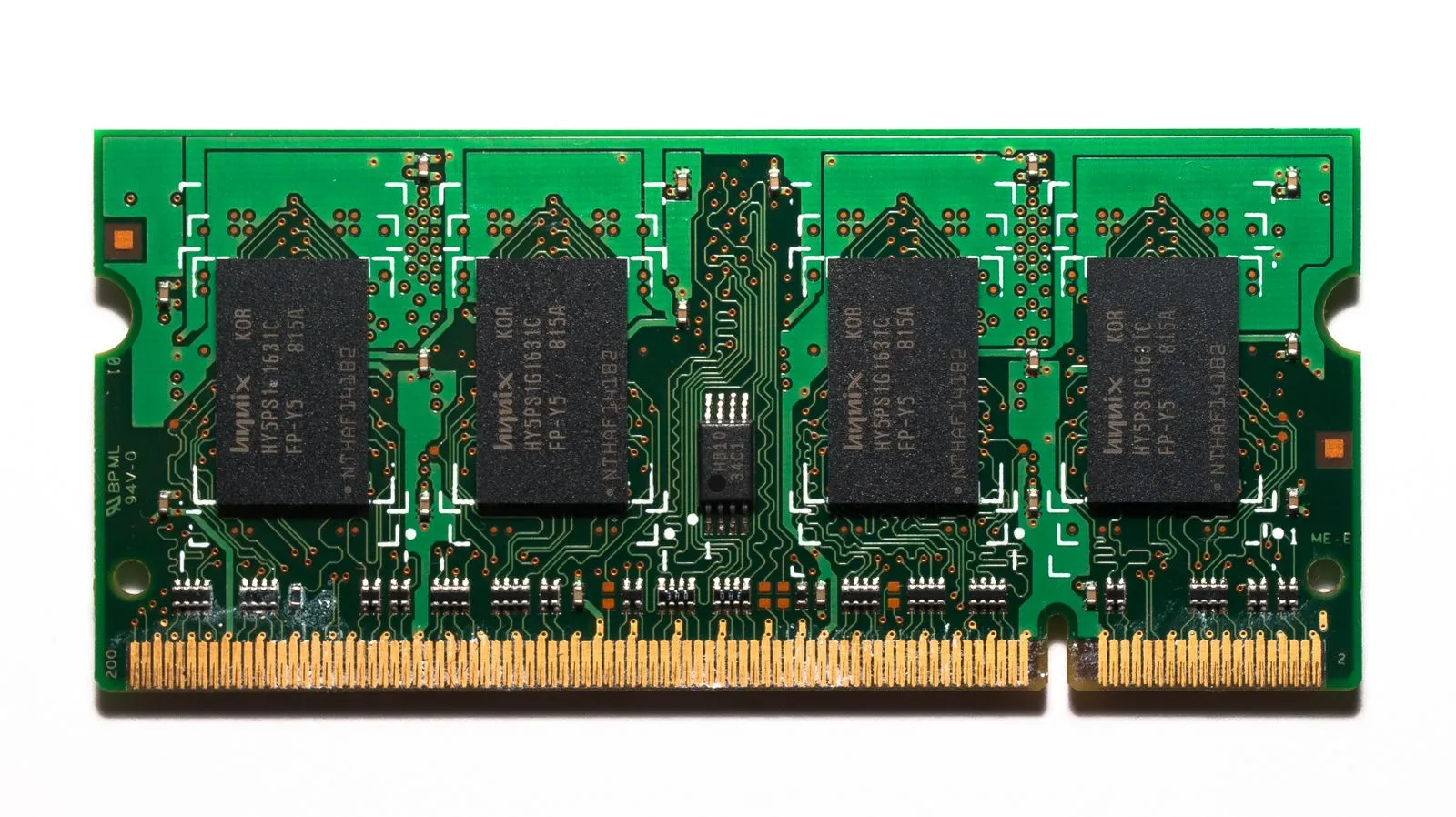
I’ve been watching RAM prices climb all year — we even covered the record highs on this site recently — so when OpenAI CEO Sam Altman casually called the RAM in your PC “quite terrible,” I knew exactly why PC builders lost it. It’s one thing to hear that your upgrade got expensive. It’s another to hear one of the world’s biggest buyers of memory suggest your computer doesn’t deserve its share in the first place.
Here’s what Altman actually said, why Elon Musk jumped in with a meme, where Altman’s argument is half right, and what this fight tells us about RAM prices going into 2027.
What Sam Altman actually said about RAM
Altman made the remarks on the October 29 episode of Cheeky Pint, the interview show hosted by Stripe co-founder John Collison. Collison asked about the memory shortage, and Altman went after an idea that’s popular with AI enthusiasts: local inference — running open-source AI models on your own computer instead of renting time in a data center.
Altman’s point, in his own words, was about global allocation: it’s “quite terrible” for everybody to hold a chunk of the world’s limited DRAM supply in their own computer when that memory is “being used five percent of the time.” In a supply-constrained world, he argued, you want “maximum utilization in the cloud,” where servers run around the clock serving thousands of people. He added that most people’s intuition runs the other way — and, in the same conversation, that “the invisible hand is failing right now” when it comes to fixing the shortage.
Now, some context that matters: Altman wasn’t announcing a policy or telling anyone to hand over their RAM sticks. He was answering a question about whether local AI on personal machines could ease the need for giant data centers. His answer was no — and the reasoning was pure efficiency math. A server DIMM in a busy inference cluster works nearly all the time. Your gaming rig spends most of its life idling, asleep, or switched off.
Why Elon Musk — and half the internet — jumped on it
The backlash was fast and loud, and it came from people who are currently paying the bill for the shortage. PC builders, gamers, and hardware buyers have watched memory prices surge all year, and Altman’s comment landed as a billionaire telling them their computers are the problem.
Elon Musk weighed in on November 1 on X, posting “The people deserve to have their RAM too!” alongside a meme riffing on the idea that keeping memory in your own PC is somehow an offense against the cloud. One reply that summed up the mood nicely: “It’s only 64GB, but you can take it from my cold, dead hands.”
The reaction wasn’t just memes, either. Forbes senior contributor Paul Tassi was among the more restrained critics, and plenty of others were far less polite. (Altman was in the news here just last week for different advice — his blunt message to young workers — so he’s clearly not in a mood to soften his takes.)
There’s also history here. Musk co-founded OpenAI with Altman, sued the company in 2024 claiming it had abandoned its nonprofit mission, and lost that $150 billion lawsuit when a federal jury found OpenAI, Altman, and president Greg Brockman not liable on all claims in May 2026. So this isn’t just a debate about chips — it’s the latest round of a very public, very personal feud.
The part Altman left out: OpenAI is one of the biggest buyers
Here’s where Altman’s efficiency argument gets awkward. OpenAI isn’t a neutral observer of the DRAM shortage — it’s one of the main reasons demand is through the roof.
Back in October 2025, OpenAI signed letters of intent with Samsung and SK hynix covering up to 900,000 DRAM wafers per month for its Stargate data center buildout — a figure that’s been estimated at close to 40% of global DRAM output. Treat that as a reported figure rather than a confirmed one, since OpenAI hasn’t broken the numbers down publicly, but the direction is not in doubt: AI companies have reserved huge chunks of memory makers’ output for years ahead.
And the memory makers have followed the money. Samsung, SK hynix, and Micron have shifted capacity toward high-bandwidth memory (HBM) and server DRAM for AI accelerators, because that’s where the margins are. Reports put SK hynix’s margin around 80%, with the shortage possibly lasting until 2030, while Micron has guided for tighter supply through 2028. Altman himself blamed part of the problem on manufacturers’ caution, noting in the interview that DRAM producers once invested $20 billion in capital expenditure and earned back only $19 billion — which, to be fair, is exactly why they’re in no hurry to overbuild again.
So the irony writes itself: the man saying your PC is hogging the world’s memory runs a company that has locked up an enormous share of that same memory. That’s why the comment stung. It’s not that the utilization math is wrong — it’s that the person doing the math is also the person buying up the supply.
What this means for RAM prices right now
Strip away the drama and the market picture is grim for anyone shopping for memory. Conventional DRAM contract prices — what PC makers pay chipmakers before costs reach store shelves — jumped roughly 93% to 98% in the first quarter of 2026 alone, according to TrendForce. At retail, a 32GB kit of DDR5 now runs about $500, up from roughly $400 in early April, per a Tom’s Guide investigation. TrendForce projected in September that conventional DRAM contract prices would rise another 10% to 15% quarter-over-quarter in Q4 2026, and warned that PC DRAM supply could actually decrease in 2027 as manufacturers shift more capacity to server products.
We dug into this in detail in our article on why a 32GB kit costs 5x more than last year — if you’re wondering whether to buy now or wait, that’s the deeper breakdown. The short version: nobody credible expects prices to fall back soon, and 2027 looks tighter, not looser, for consumer DRAM.
My practical take, for what it’s worth: if you genuinely need a RAM upgrade — you’re stuttering in games, your video edits crawl, your browser eats 16GB for breakfast — buy it, but buy exactly what you need and check compatibility first. Don’t panic-hoard a second kit “just in case,” because that’s the consumer version of what Altman is complaining about, and it only feeds the shortage. If your current setup is fine, waiting costs you nothing. The shortage isn’t going anywhere, but neither is your PC.
Local AI vs. cloud AI: the real argument underneath
Underneath the meme war is a genuine fork in the road for AI. Altman’s vision is centralized: giant data centers, maximum utilization, everyone rents intelligence from the cloud. The local-inference crowd wants the opposite: open models running on hardware you own, with your data staying on your machine, no subscription, no outage, no company deciding what your computer is allowed to do.
Both sides have a point, and I think both will win in different places. Local AI is already great for privacy-sensitive work, offline use, and hobbyists — and dedicated AI hardware like NVIDIA’s RTX Spark boxes shows there’s real demand for it. But the biggest models will live in data centers for the foreseeable future, because that’s where the memory and power are.
A PC is not a shared utility. Nobody buys memory to maximize global efficiency — they buy it so their own machine works when they need it. That 5% utilization number might be roughly right for a home PC, but it misses the point entirely: the other 95% is called “being available.” Your spare bedroom is “used” 5% of the time too. That doesn’t make it a waste.
What happens next
Don’t expect an apology tour. Altman has a habit of saying the quiet part out loud, and the economics behind his comment aren’t changing. AI data center demand keeps growing, memory makers keep prioritizing server and HBM production, and consumers keep paying more. The thing to watch is whether any memory maker breaks ranks and meaningfully expands consumer DRAM capacity. Until then, your RAM is yours — 5% utilization and all — and no podcast comment changes that.
Altman is right that a data center uses memory more efficiently than your PC does. He’s wrong if he thinks efficiency is the only thing that matters. People don’t buy computers to be efficient nodes in someone else’s cloud. They buy them to own something that works for them, on their terms, whenever they sit down. That idea is worth defending — even, and maybe especially, when the world’s most powerful AI CEO calls it terrible.
[…] the bigger picture on the AI chip shortage, my piece on the Sam Altman RAM controversy covers the same supply crunch from the memory side, and the Alphabet $500 billion wipeout shows how […]
[…] Two things are driving that number. First, Microsoft is building a “very premium, very high end” device, in Sarah Bond’s words — a machine designed to compete with gaming PCs, not just with the PlayStation 6. Second, the global memory crisis. RAM prices have exploded this year as AI data centers swallow the world’s memory supply — a 32GB DDR5 kit now costs roughly five times what it did last year, and the shortage is expected to run into 2028. Sony is reportedly pushing the PlayStation 6 back to 2028 or even 2029 for the same reason. A console with up to 48GB of GDDR7 memory, as the Magnus leaks suggest, would be expensive to build in any market. In this one, it’s brutal. Even Sam Altman got dragged into the RAM debate this month. […]