

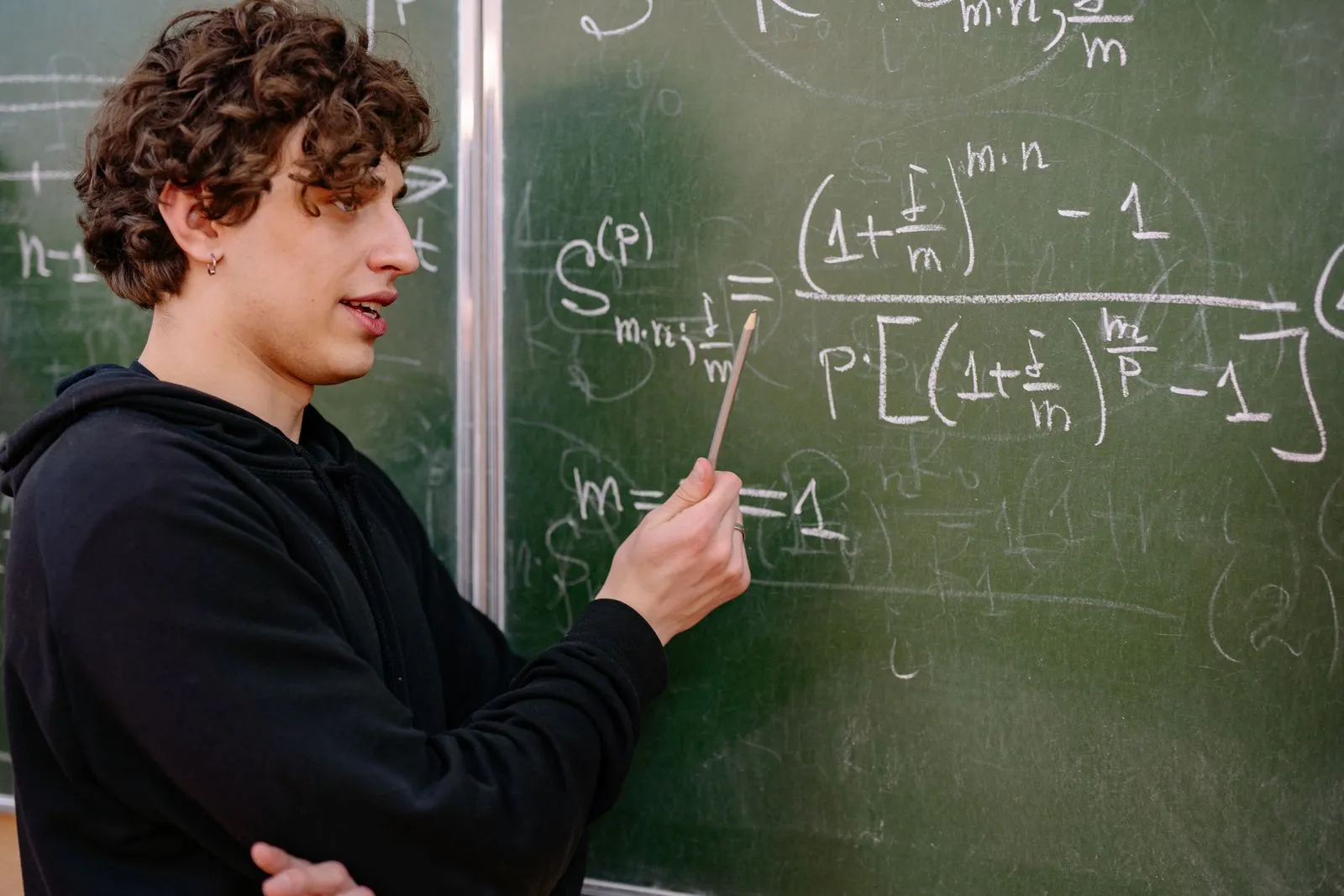
Berkeley Professor Stopped Grading Homework: What Actually Happened
A Berkeley professor stopped grading homework because of AI, and I think he has a point. Richard Borcherds is not some frustrated adjunct venting on social media. He is a mathematics professor at the University of California, Berkeley, and he won the Fields Medal in 1998, which is about as close as mathematics gets to a Nobel Prize. When a mathematician of that standing says homework grading has stopped working, it is worth paying attention.
Here is what changed. Borcherds stopped grading his students’ homework for correctness. Instead, students now get credit mainly for turning the work in. The actual grades, the ones that matter, come from in-person exams where students cannot use electronic devices. Online exams, in his view, have become a waste of time, because some students answer them with AI and average scores on those exams have risen sharply.
His reasoning is blunt and, honestly, hard to argue with. If student use of AI for homework is now widespread, then grading homework for correctness does two bad things at once: it rewards students who quietly use AI, and it punishes the honest students who do the work themselves. Paying teaching assistants to carefully mark answers that a chatbot produced is, in his words, a poor use of everyone’s time and money. He admits his new system is not a very good one. He just does not have a better one yet.
Why Grading for Correctness Broke
Homework used to work because it measured something real. A professor assigned problems, a student wrestled with them, and the finished page showed what the student understood. That chain depended on one assumption: the person who turned in the work was the person who did the work. AI broke that assumption quietly, without any announcement, and it broke it for every subject at once.
The problem is not that students are suddenly lazier than they were five years ago. The problem is that the tool got too good, too fast. Five years ago, Borcherds himself thought mathematics was one of the fields least likely to be disrupted by AI. Now he says he does not know what to tell students who want to become mathematicians. When he asked ChatGPT what advice to give them, even the chatbot did not know. That is a remarkable admission from a man who has spent his life solving problems other people call impossible.
There is a second, quieter problem. You cannot reliably tell AI-written work from human-written work anymore. Early AI output had tells: odd phrasing, confident nonsense, mistakes a real student would not make. Those tells are fading. Borcherds says it has become increasingly difficult to distinguish the two, and that matches what I have seen across education reporting all year. Once a detection method works, the next model update breaks it. It is an arms race, and the homework assignment is caught in the middle.
Why AI Detection Tools Will Not Fix This
The obvious fix is to run student work through an AI detector and catch the cheaters. UC Berkeley looked into that route and, so far, has not taken it. The university has built an online AI hub and asked faculty to spell out AI-use expectations in their course outlines. But it has explored detection software, including Turnitin, and has not settled on any system reliable enough to use as a campus-wide standard. Individual instructors still set their own classroom rules.
That hesitation is smart, and other schools should copy it. Detection tools have two failure modes, and both are bad. False negatives let AI work through, which makes the whole exercise pointless. False positives accuse honest students of cheating, which is worse, because a false accusation can wreck a student’s record over work they actually did. No detector on the market right now is accurate enough to bet a student’s grade on, and the companies selling these tools know it, even if their marketing pages do not say so.
So the detection route is a dead end for now. That leaves teachers with a harder question: if you cannot police homework, what is homework for?
What This Means for Students Right Now
If you are a student, Borcherds’ decision is not a free pass. It is a warning. Homework credit might be easy, but the in-person exam is where your grade now lives, and no chatbot is coming with you into that room. The students who treat this as permission to stop learning are going to walk into that exam and hit a wall. The students who adapt will be fine, and probably better off than before.
Use AI as a Tutor, Not a Vending Machine
There is a big difference between pasting a problem into ChatGPT or Claude and copying the answer, versus asking the same tool to explain the idea behind the problem. The first version teaches you nothing. The second version is genuinely useful, and it is how I would use these tools if I were back in a math class tomorrow.
Try this instead: attempt the problem yourself first, even if you get stuck halfway. Then ask the AI to explain the step where you got stuck, not to solve the whole thing. Then close the chat and redo the problem from scratch on paper. If you cannot redo it without the screen in front of you, you have not learned it yet, and no amount of completed homework will save you on exam day. That redo step is the whole trick. It takes ten extra minutes and it is the difference between understanding and pretending.
For building the underlying skills, free resources like Khan Academy are still the best place to fill gaps in algebra, calculus, and statistics before they snowball into a failed exam. If you want a broader set of options, our earlier roundup of the best free AI tools for students covers the tools worth your time and the ones that are just hype.
Prepare for the Exam That Actually Counts
Borcherds’ model, if it spreads, changes what studying means. Homework stops being the rehearsal and the exam becomes the whole show. That means timed practice under exam conditions matters more than ever: no phone, no laptop, a clock running, and problems you have not seen before. It feels worse than doing homework with a chatbot open. That discomfort is the point. Exams measure what you can do alone, and alone is the only condition that still counts.
And since in-person exams may now carry most of your grade, keep track of where you actually stand. If your university uses a 4.0 scale, our free CGPA calculator turns your marks and credit hours into a semester GPA in seconds, so a bad exam does not ambush you at the end of the term.
What Universities Should Do Instead
Berkeley’s approach so far is a decent template, even if it is incomplete. Spell out the AI rules in every syllabus, so students are not guessing what counts as cheating. Build an AI hub with real guidance instead of vague warnings. And stop pretending detection software will sort this out. The schools that handle this well will be the ones that redesign assessment instead of policing it: more in-person work, more oral explanations, more problems where the student has to show their reasoning step by step rather than just deliver a final answer.
The Question Nobody Can Answer Yet
Strip away the homework debate and a bigger question is sitting underneath it. Borcherds worries that, if AI keeps improving at its current rate, there may soon be nothing human mathematicians can do that AI cannot do better. He compares it to looms replacing hand weaving and cars replacing horses, except this time it is happening to mathematics itself, a field that always assumed it was safe.
I am not ready to go that far. Mathematics is not just producing correct answers. It is choosing which questions matter, judging whether a proof is elegant or merely correct, and explaining an idea so another human being understands it. Those are judgment calls, and judgment is the part AI still fakes rather than performs. But I also would not bet my career advice on that distinction holding forever, and neither, apparently, would Borcherds.
For now, the practical answer is boring and useful at the same time. Learn the material well enough to pass an exam with no devices in the room. Use AI to understand faster, not to skip the understanding. And if your professor stops grading your homework, do not celebrate. Ask yourself what that professor is really telling you: the easy part of the course just ended, and the part that counts is about to begin.
[…] reading: the Berkeley professor who stopped grading homework because of AI shows how schools are already rewriting the rules in real […]