

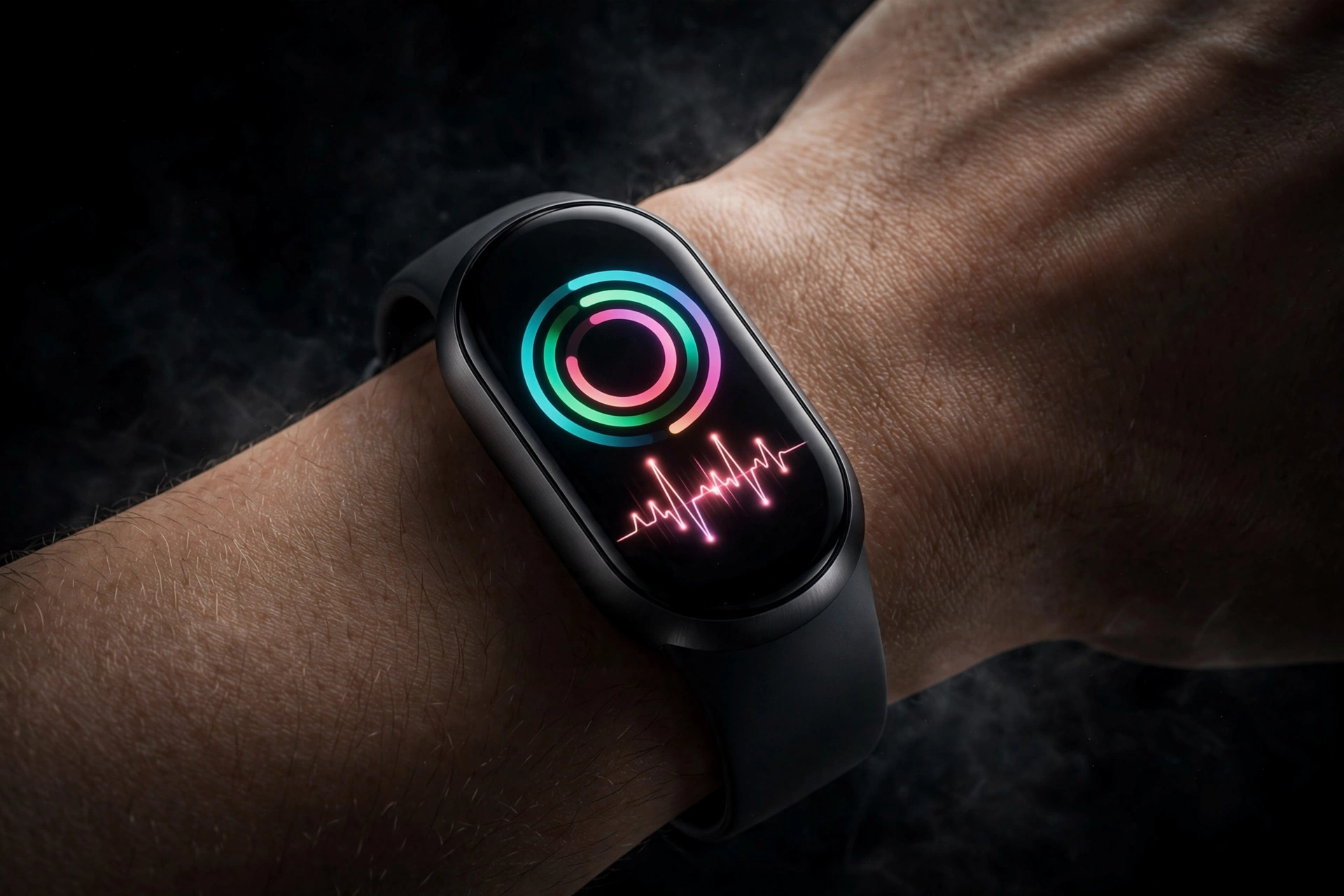
Google announced the Fitbit Edge yesterday, and honestly, it might be the most interesting thing Google’s health division has done since it swallowed Fitbit whole back in 2021. Preorders are live right now at $179.99, with retail shelves following on October 27 — and the tracker is already one of the fastest-spiking tech searches in North America. Here’s everything you need to know: the price, the release date, the specs that actually matter, and my honest take on whether you should buy one.
What Is the Fitbit Edge?
The Google Fitbit Edge is Google’s new mid-tier fitness tracker, officially unveiled on October 12, 2026 after a couple of weeks of leaks (and Google’s own teaser on X on October 9, which basically confirmed the whole thing). Google’s pitch: it’s the tracker that sits between the screenless Fitbit Air — a $100 band the company started shipping back in May — and the full-blown Pixel Watch.
I’ve been watching Google’s wearables strategy for years, and this one finally makes sense. After the $2.1 billion Fitbit acquisition, Google spent a few years awkwardly gluing Fitbit into its hardware lineup. The Edge is the first tracker that looks like it was designed inside Google’s system instead of being a Fitbit product with Google stickers on it. It runs Google Health software rather than Wear OS, borrows the Pixel Watch’s interface style, and plugs straight into Google’s health ecosystem.
Think of it this way: Google now sells you three levels of wrist hardware — minimal (Air), middle (Edge), and full smartwatch (Pixel Watch). The Fitbit Edge is for people who want serious fitness tracking and a real display, but have zero interest in installing apps on their wrist.
Fitbit Edge Price and Release Date
Here’s the short version: Fitbit Edge preorder is open now through the Google Store and participating retail partners. The standard Fitbit Edge costs $179.99. There’s also a Stephen Curry special edition at $219.99 — mostly a design collaboration, since Google hasn’t detailed any hardware differences between the two editions.
The Fitbit Edge release date for retail shelves is October 27, 2026. Every purchase includes three months of Google Health Premium, which unlocks Gemini-powered coaching and deeper health insights — after the trial, that’s a paid subscription.
Compatibility is refreshingly broad: it works with phones running Android 11 or later and iPhones on iOS 16.4 or later. You’ll need a Google Account and the Google Health app to set it up.
On the Fitbit Edge price: $179.99 is a deliberate middle slot — $80 above the screenless Air and comfortably under full smartwatch pricing. It’s priced to fight the mid-range fitness band crowd, and it’s aggressive enough that it makes both the Air and the Pixel Watch harder to justify for a lot of people.
Fitbit Edge Specs: The Features That Actually Matter
Spec sheets are where trackers live or die, so let’s get into the real Fitbit Edge specs:
- Display: 1.34-inch AMOLED touchscreen — Google calls it its largest and brightest tracker display, with 46% more viewing area than previous Fitbit generations.
- Size and weight: 11.5mm thick, 17.7 grams, recycled aluminum case. Google claims it’s 45% lighter than the Apple Watch Series 12 — a convenient comparison, though the two products aren’t really chasing the same buyer.
- Physical side button: for pausing workouts and quick actions. Anyone who’s ever fought a touchscreen with sweaty fingers will appreciate this.
- Fitbit Edge battery life: up to 7 days on a charge; around 2 days with the always-on display enabled. Five minutes of charging gets you roughly a day, and a full charge takes about 90 minutes.
- Replaceable battery: the Edge is Google’s first repairable Fitbit — when the battery degrades, you can swap it instead of buying a whole new tracker. This deserves more attention than it’s getting; repairability is genuinely rare in wearables.
- GPS + altimeter: built-in GPS that Google says is up to 40% more accurate than previous generations, and it works without your phone. An altimeter tracks elevation.
- Workout tracking: more than 50 workout modes with real-time guidance, and automatic detection for up to 100 activity types.
- Health sensors: ECG, SpO2, optical heart-rate sensor, and skin-temperature sensing. It tracks steps, distance, calories, sleep, menstrual cycle, VO2 max, and cardiac load, and can flag atrial fibrillation and irregular heart rhythms.
- Durability: 5ATM and IP68 water resistance, aluminum body with a nano-coating.
- Smart features: Google Maps, media controls, call and message notifications, customizable watch faces, and interchangeable straps. Bluetooth 5.4.
My read: on paper, this is the best-equipped tracker Fitbit has ever shipped. The headline feature for most people won’t be the bigger screen — it’ll be the auto-detection of 100 activity types plus real-time workout guidance. That’s the stuff you actually feel in daily use.
Fitbit Edge vs Pixel Watch vs Apple Watch
So where does the Edge fit? If you want apps, third-party complications, and a proper smartwatch experience, you buy the Pixel Watch — or an Apple Watch if you’re on iPhone. If you want a week of battery life, a lighter device, and fitness tracking that goes deep without the app-store overhead, the Edge wins — and it costs noticeably less than either smartwatch.
There’s also the screenless crowd: Whoop and Oura sell you health data without a display at all — and fitness trackers as a category are booming, with Circana reporting an 88% increase in tracker purchases between 2024 and 2025. The Edge sits right in the middle of that spectrum: a screen, serious sensors, and a price that undercuts the smartwatch tier.
The honest comparison: the Fitbit Edge vs Apple Watch and Pixel Watch debates both end the same way — the Edge doesn’t replace a smartwatch. It’s for the person who already knows they don’t want one.
The Subscription Catch
Here’s the part nobody puts in the headline: the three months of Google Health Premium included with the Edge expire. After that, the Gemini-powered coaching and the deeper trend insights cost extra. The hardware price is the entry ticket; the coaching subscription is the business model.
I’m not saying that’s evil — personalized coaching genuinely costs money to run — but factor it into your math. If you’re only willing to pay $179.99 total, you should know the “smart” parts of the coaching get dumber (or at least pricier) after month three.
Is the Fitbit Edge Worth It?
My take: if you want serious fitness tracking, weeklong battery life, and a screen — and you don’t care about running apps on your wrist — then yes, $179.99 is a fair price for what’s on offer. The replaceable battery alone makes the Edge a longer-term buy than any tracker Fitbit has sold before, and the 100-activity auto-detection is the kind of feature that quietly changes how much you actually use the thing.
Skip it if: you already own an Apple Watch (ecosystem lock-in is real, and the Edge won’t beat it for iPhone users), you want a proper smartwatch (get the Pixel Watch), or you just want to count steps (the $100 Fitbit Air does that job fine).
Verdict: Google finally built the tracker Fitbit always should have been — slim, capable, repairable, and priced like it means it. Preorders are live; it hits stores October 27.