

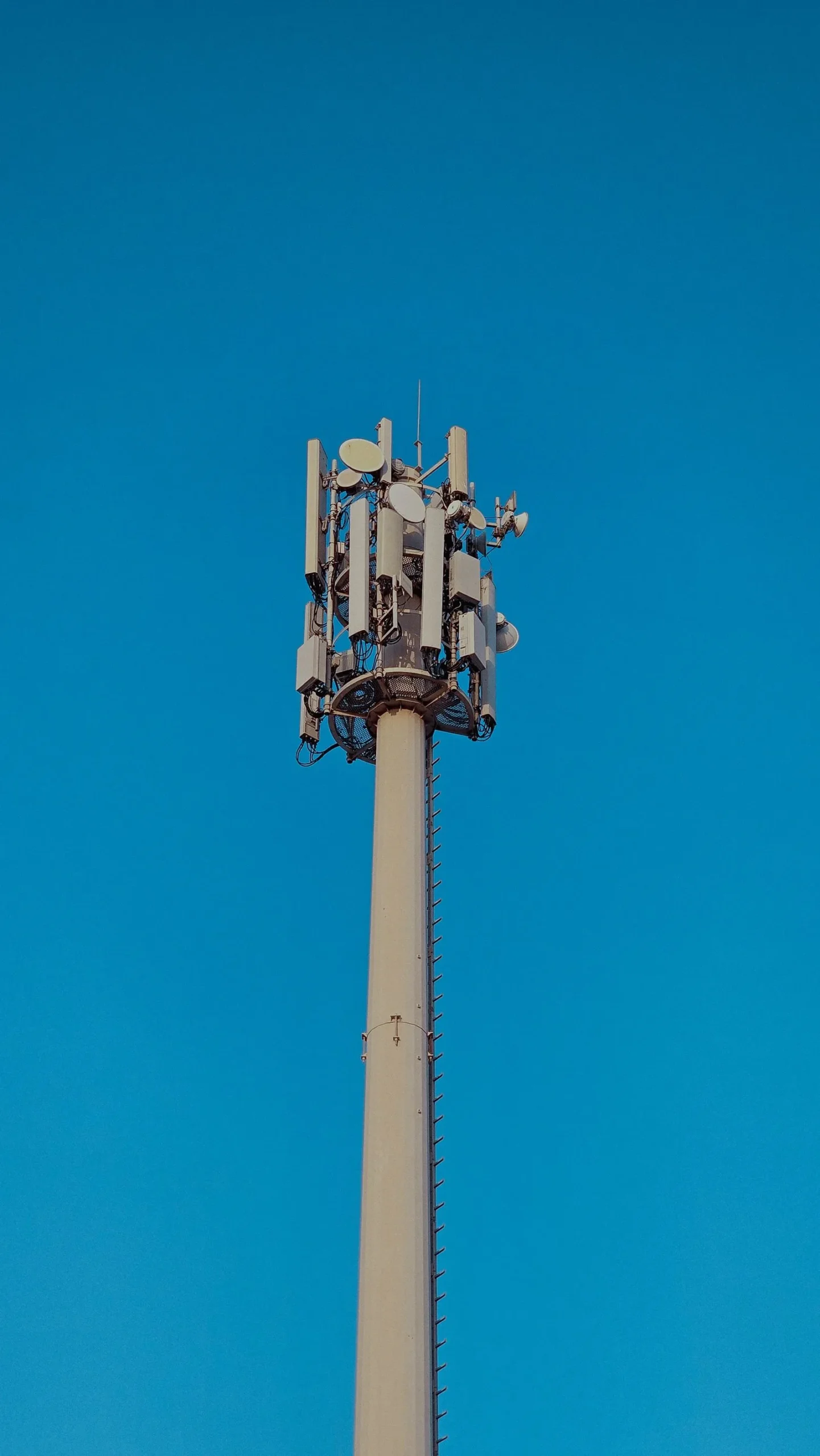
There’s a sentence from T-Mobile‘s earnings call this week that I keep coming back to, because it’s the kind of blunt corporate “no” you rarely hear out loud. Asked whether T-Mobile would ever let SpaceX sell mobile service over its network, CEO Srini Gopalan said: “I see no room for an MVNO with SpaceX.” Not “we’re evaluating it.” Not “never say never.” No room — on the consumer side or, notably, on the physical and edge AI side either.
That matters because SpaceX isn’t some startup dreaming about becoming a phone company. It’s already the company that put satellite texting on ordinary phones, it’s sitting on a growing pile of terrestrial spectrum, and it’s reportedly hunting for access to at least 80,000 cell tower sites across the United States. T-Mobile’s answer is the clearest signal yet of how the existing carriers plan to handle that ambition: cooperate on satellite as a side dish, but don’t hand over the main course.
What T-Mobile actually said — and why it said it on an earnings call
The rejection came during T-Mobile’s third-quarter 2026 earnings call on October 28, 2026 — a call where the company otherwise had plenty to celebrate. Revenue rose 7.4% year over year to $23.58 billion, net income jumped 27.3% to $3.46 billion, and T-Mobile added 274,000 postpaid accounts, bringing its total to 35 million. It even raised its full-year guidance. So this wasn’t a defensive company lashing out; it was a confident one drawing a line.
Gopalan laid out T-Mobile’s test for any MVNO deal — a mobile virtual network operator arrangement, where one company sells wireless service using another company’s network. His three questions: does it bring incremental customers, new distribution channels, or new capabilities? SpaceX, in his view, brings none of the three. “We see ourselves in the lead in terms of those capabilities,” he said, “and we see no space for an MVNO here because what additional capabilities does it give us?”
He also took a swipe at the underlying technology argument. Satellite, he said, is “an inferior version of fixed wireless access with even more constraints,” pointing to beam size and capacity limits. Two-thirds of T-Mobile’s fixed wireless customers, he noted, come from dense urban areas — exactly the places where satellite coverage is weakest and where T-Mobile still sees, in his words, huge growth opportunities.
What is an MVNO, and why does SpaceX want one?
An MVNO is a carrier that doesn’t own the network it sells. It buys wholesale access from a network owner — one of the Big Three in the US — and resells service under its own brand. It’s how dozens of smaller brands operate, and it’s the fastest route to becoming a phone company without spending a decade building towers.
For SpaceX, an MVNO deal would solve its biggest problem. The company has been quietly assembling terrestrial spectrum — roughly 15 MHz of unpaired nationwide AWS-3, around 40 MHz of AWS-4, about 10 MHz of H-block, and roughly 14 MHz of paired 800 MHz spectrum — but analysts widely consider that stash insufficient to run a competitive mobile service in cities on its own. An MVNO agreement with a major carrier would bridge the gap while SpaceX builds out its own infrastructure. Without one, its most realistic path is a hybrid: its own spectrum plus satellite capacity plus leased tower space.
That’s where the reported 80,000 cell sites come in. SpaceX is reportedly seeking access to at least 80,000 US cell tower sites — at a rumored $75,000 per site, that’s roughly $6 billion just for site access. Add the Federal Communications Commission‘s approval for up to 15,000 of its V2 (Gen2) satellites capable of connecting directly to ordinary smartphones, and you can see the shape of the plan: a network that blends space and ground, built to serve not just people but robots, cars, and AI agents.
Why T-Mobile isn’t the only carrier saying no
Here’s the part that should worry SpaceX more than any single quote: all three major US carriers have now effectively closed the same door. Verizon‘s CEO Dan Schulman recently ruled out an MVNO arrangement with SpaceX, and AT&T‘s CEO John Stankey has publicly played down the threat SpaceX poses. When the only three companies that own nationwide networks all decline to rent you theirs, your options narrow fast.
None of this means the carriers are cutting SpaceX off entirely — and the distinction matters. T-Mobile already partners with SpaceX on T-Satellite, the satellite-to-phone service that lets ordinary phones send texts (and increasingly more) from places with no cell signal at all. Gopalan was explicit that this kind of deal is welcome: “If we’re talking about SpaceX as a customer or us being a customer of them, that’s a purely commercial agreement… If it’s a complementary product, I’m very happy to look at a resale arrangement, which is exactly what T-Satellite was.”
Satellite as an add-on that fills dead zones? Great, let’s do business. Satellite as a rival carrier riding on T-Mobile’s network? No room. The carriers will buy SpaceX’s satellite capacity the way you’d buy a spare tire — useful in an emergency, but you’re not letting it drive the car.
The real fight: physical AI, 6G, and who owns the network of robots
The most interesting part of Gopalan’s answer wasn’t about consumer phone plans at all. He specifically ruled out an MVNO for “physical AI” — the industry’s term for robots, autonomous machines, and AI agents that need constant, low-latency connectivity in the real world. T-Mobile doubled down on this vision on the same call, with CTO John Saw laying out the company’s standalone 5G and AI-RAN work, and Gopalan claiming T-Mobile will be the first US carrier to launch 6G.
This is the fight underneath the fight. Both T-Mobile and SpaceX see the same future: a world where connectivity isn’t just for phones in pockets but for humanoid robots in warehouses, self-driving cars, and fleets of AI agents doing physical work. T-Mobile is building that future on its 5G-Advanced network, edge computing partnerships like Kinetic Edge with Amazon Web Services, and early AI-RAN field trials with Ericsson that Gopalan said have “surprised” the company with their early gains. SpaceX wants to build it from orbit and from its own ground network. Whoever owns the connectivity layer for physical AI owns a toll booth on the next decade of automation.
That’s also why Gopalan sounded slightly exasperated describing SpaceX’s shifting identity: “It’s hard to refer to them now as a satellite provider or a satellite provider that is going to build terrestrial.” When your partner keeps morphing into your competitor, you stop sharing the network.
What this means for you
For most phone users, nothing changes tomorrow — and that’s kind of the point. T-Satellite isn’t going anywhere; if anything, the carriers’ willingness to keep buying satellite capacity as a complement means dead-zone texting and emergency connectivity will keep improving. What you almost certainly won’t see is a “Starlink Mobile” plan sold at a discount over T-Mobile’s network, because the carriers have now said, in public and in unison, that they’re not interested in creating their own biggest competitor.
The more interesting question is what SpaceX does next. Building a nationwide mobile network from scratch — spectrum, towers, core network, retail, customer service — is one of the hardest and most capital-intensive projects in tech, and SpaceX would be doing it against three entrenched incumbents who just told it to go it alone. The reported tower-leasing push suggests it’s serious about trying anyway. If it succeeds, the US could eventually get a genuine fourth facilities-based carrier, built from space down rather than ground up. If it stalls, the satellite-to-phone features we’re already getting may be the ceiling of the partnership.
Either way, the era of polite ambiguity is over. T-Mobile’s CEO just told the world’s most ambitious space company, on a recorded earnings call, that there’s no room for it on his network. SpaceX’s response — whether it’s more spectrum purchases, more tower deals, or a full go-it-alone build — will be one of the most consequential telecom stories of the next few years. I’ll be watching the FCC filings and the tower deals, because that’s where the real answer will show up first.
The bottom line
T-Mobile rejected a SpaceX MVNO deal because it sees no new customers, channels, or capabilities in it — and because it views satellite as inferior to fixed wireless outside deep rural areas. The door stays open for commercial satellite resale like T-Satellite, but closed to any arrangement that would let SpaceX sell mobile service on T-Mobile’s network. With Verizon and AT&T taking the same position, SpaceX’s path to becoming a phone company now runs through its own spectrum, its own towers, and its own satellites. That’s a much longer, much more expensive road — and it’s the one SpaceX seems to be walking anyway.