

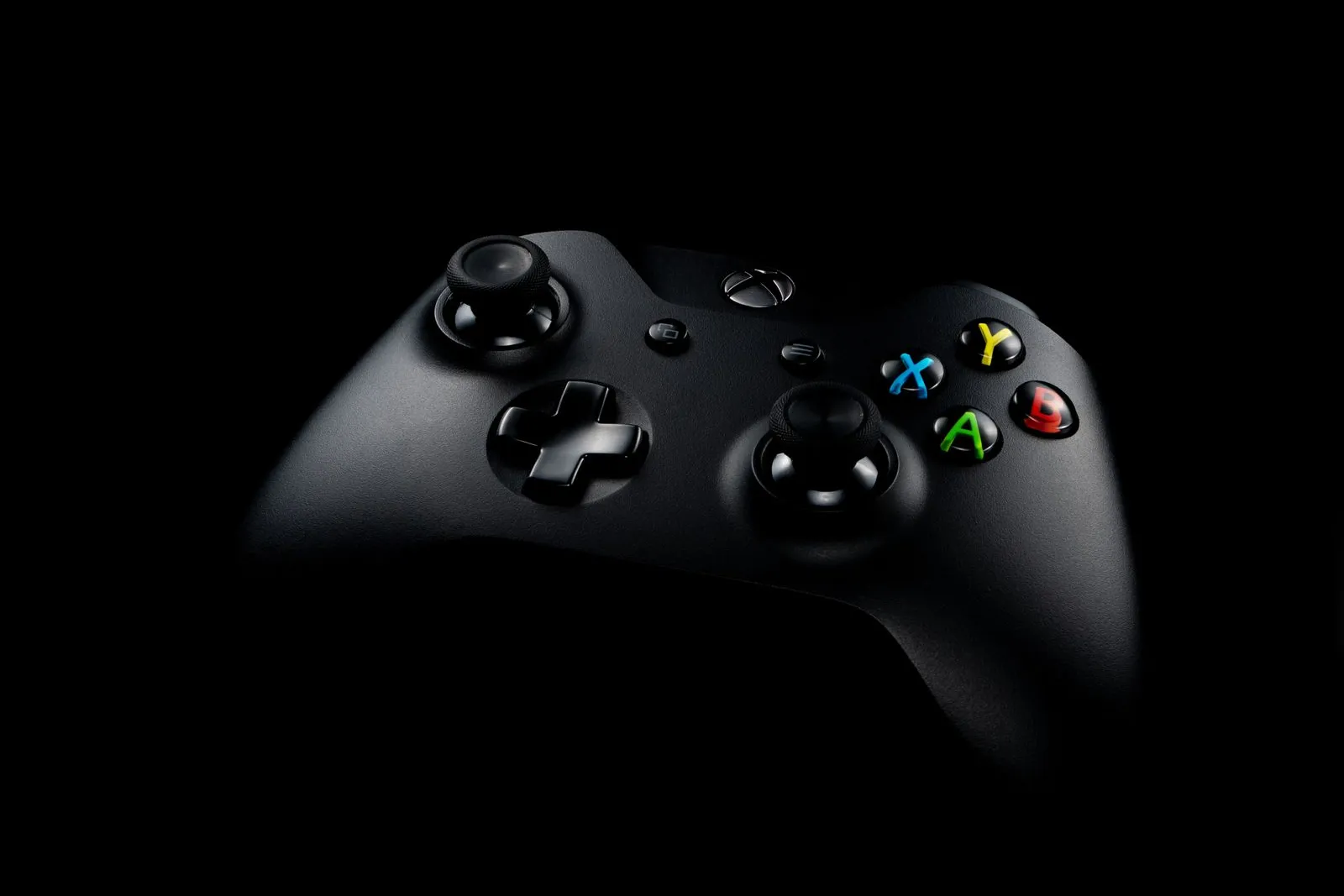
For months, the next Xbox has been the worst-kept secret in gaming — and also the least-understood one. Is it a console? A PC in a fancy box? A $1,800 science experiment? Yesterday, on Xbox’s 25th birthday, Microsoft finally gave us a straight answer. Sort of. Xbox Project Helix, the codename for the next-generation Xbox, is “a console that is also capable of playing games from your PC,” according to Jason Ronald, Xbox’s vice president of next generation. Not a PC that plays console games. A console first.
What just happened: Xbox turned 25 and spilled (some of) the beans
On November 15, 2026, Xbox turned 25, and Microsoft marked it with a free 116-page magazine on Xbox Wire, with an eight-page feature on the Project Helix console inside. Built around an interview with Jason Ronald, it offers no price, no release date, and no spec sheet — but it’s the clearest definition of the machine since Microsoft first named it at GDC in March. Three days earlier, Xbox CEO Asha Sharma’s anniversary memo said a fifth console generation is on the way. Ronald’s headline quote: “We’re very clear on the design goal: Helix is designed to be a console that is also capable of playing games from your PC. It is not a PC that can also play console games.” Everything you own, in one box, with no tinkering required.
What Microsoft has actually confirmed about Project Helix
There’s a lot of noise around this console, so here’s what’s on the record versus what’s just reported:
| Confirmed by Microsoft | Reported, not confirmed |
|---|---|
| Next-gen, first-party Xbox console (GDC, March 11, 2026) | Price of $1,200–$1,800, per internal projections reported by Fortune (Oct 20) |
| Custom AMD chip, co-designed for next-gen DirectX and FSR | Console launch in holiday 2028; a first-party handheld in holiday 2027 |
| Plays Xbox console games and PC games | “Magnus” chip: 11 Zen 6 cores, 68 RDNA 5 CUs, up to 48GB of GDDR7 |
| Console-first design — “not a PC that can also play console games” | 4K at 120 frames per second as the performance target |
| Four generations of Xbox games and progress carry over | Open access to PC storefronts like Steam |
| Neural rendering; alpha hardware to developers in 2027 | Final name, disc drive decision, full specs, and whether Microsoft will subsidize the price |
Notice how short the left column is. Eight months after the GDC reveal, Microsoft has confirmed a philosophy, a chip partner, and a developer milestone — and almost nothing else. That’s either admirable discipline or a company that knows the price is going to hurt and wants to delay that conversation as long as possible.
So is Project Helix a PC or not?
This is the question that has followed Helix since March, and Ronald’s interview is the first time Microsoft has answered it directly: no, it’s not a PC — but for the first time, an Xbox console plays PC games by design.
Helix runs on Windows under the hood — former Xbox executive Sarah Bond and Xbox CTO Scott Van Vliet have both pointed that way — but you won’t be staring at a desktop. The model is the ROG Xbox Ally handheld, Microsoft’s $1,000 Asus partnership device, whose Xbox Full Screen Experience wraps Windows in a console-style interface built for controllers and TVs. The Ally has been described as essentially an early version of what the next Xbox will feel like: a console with a PC hiding inside it, rather than a PC pretending to be a console.
The upside is enormous. If Helix really is an open platform, Xbox players could suddenly have access to Steam and decades of PC games on top of their Xbox library — the biggest game catalog any console has ever offered. The downside: Windows is not an elegant gaming platform, and the Ally’s Full Screen Experience still needs work before it feels as instant as a console dashboard. Microsoft has two years to close that gap. And the one thing Ronald did not answer — which PC stores will actually work on Helix. Until Microsoft names one, treat “plays PC games” as a promise, not a feature list.
The $1,200 question: the Xbox Helix price problem
On October 20, Fortune reported that Microsoft’s internal projections put the Xbox Helix price between $1,200 and $1,800, unless Microsoft decides to subsidize it. Microsoft has not confirmed the figure, so take it as a projection, not a price tag. But even as a projection, it’s staggering: the Xbox Series X launched at $499. Helix could cost three times as much.
Two things are driving that number. First, Microsoft is building a “very premium, very high end” device, in Sarah Bond’s words — a machine designed to compete with gaming PCs, not just with the PlayStation 6. Second, the global memory crisis. RAM prices have exploded this year as AI data centers swallow the world’s memory supply — a 32GB DDR5 kit now costs roughly five times what it did last year, and the shortage is expected to run into 2028. Sony is reportedly pushing the PlayStation 6 back to 2028 or even 2029 for the same reason. A console with up to 48GB of GDDR7 memory, as the Magnus leaks suggest, would be expensive to build in any market. In this one, it’s brutal. Even Sam Altman got dragged into the RAM debate this month.
Would Microsoft eat some of that cost? Consoles have traditionally been sold at a loss, with the money made back on games and subscriptions. But $1,200–$1,800 leaves a lot of loss to eat, and Xbox’s business is already under pressure after years of layoffs, studio closures, and a leadership change — Xbox’s first-ever COO, Helen Chiang, left the company just last month after three months in the role. My guess: Microsoft subsidizes some of it and lands around $999–$1,299, still the most expensive Xbox ever. If that rumored price turns out to be real and you’d finance a console rather than pay cash, run the numbers on our free loan EMI calculator first — a $1,500 console on a payment plan gets expensive fast.
When is Project Helix coming out?
There is no official Xbox Helix release date, and anyone who tells you otherwise is selling you a rumor. Alpha hardware ships to developers in 2027 — a developer milestone, not a consumer launch. Fortune’s sources say a first-party Xbox handheld arrives in holiday 2027, with a holiday 2028 launch for the next Xbox console. Early 2026 reporting had pegged the console for late 2027, so this looks like a delay, and the RAM crisis makes a delay easy to believe. AMD CEO Lisa Su has hinted at a 2027 launch for the silicon inside Helix, which keeps a 2027 console launch theoretically possible — though the chip and the console are two different things. The Series X and S launched in November 2020, so holiday 2027 would be the standard seven-year cycle and 2028 would stretch it to eight. Don’t plan any purchase around a 2028 date until Microsoft says it out loud.
Project Helix specs: what’s real and what’s rumor
On Project Helix specs, Microsoft has confirmed almost nothing beyond the AMD partnership: a custom AMD system-on-chip, co-designed for the next generation of DirectX and FSR, with what Ronald called “an order of magnitude leap” in ray tracing. And neural rendering — using AI to make games look better without throwing raw power at the problem. Ronald was explicit that the next generation “won’t be defined by 8K or 240Hz.” In a world where memory costs what it does, efficiency is the smart bet.
Rumored: the “Magnus” chip — 11 Zen 6 CPU cores, 68 RDNA 5 graphics compute units, up to 48GB of GDDR7 memory. The same Zen 6/RDNA 5 combination is reportedly inside the PlayStation 6, with a target of 4K at 120 frames per second, and some reports claim Microsoft’s chip has a larger die than Sony’s and will be both more powerful and more expensive. None of this is confirmed. Treat every spec number you see online as a guess with good branding. That Project Helix vs PS6 comparison is still worth a sentence, because the two companies are taking very different bets: Sony is reportedly building a traditional console — one whose own former leadership now talks about physical discs as a “metaphor” for ownership — while Microsoft is building a console that swallows the PC whole.
Your games are coming with you — and should you wait?
If there’s one thing in the magazine that should make every Xbox owner relax, it’s this: Ronald says you’ll bring four generations of Xbox games — and your progress — with you, “available instantly.” That’s Xbox, Xbox 360, Xbox One, and Series X/S, all carrying over to Helix. Backward compatibility has quietly become Xbox’s best feature, and Bond made the same promise when announcing the AMD partnership. How Microsoft pulls it off on a Windows-based machine is still unexplained — today’s Xbox Ally handhelds don’t play Xbox console games at all — but the commitment is on the record twice now. I’m inclined to believe it.
So should you wait for Helix? Short answer: no. It’s at least two years away, with no price, no specs, no final name, and no games announced. The Series X is a genuinely good console you can buy today for $499 or less — and with Black Friday season here, deals are already appearing. If you’re still on an Xbox One, upgrading now buys you two years of great games. If you’re already on a Series X, you’re set until 2028 at the earliest. The only person who should wait is someone about to build a mid-range gaming PC: if Helix really does play your whole PC library from the couch, it might make that build redundant, and it’s worth seeing how the Steam question shakes out before spending $1,200 on parts. One more thing worth doing while you wait: check which of your older Xbox games are actually still playable. Several Xbox games are losing their servers this November and December, including Warzone on last-gen consoles and NBA 2K25 — a reminder that “your library carries over” has limits when the servers go dark.
Frequently asked questions
What is Xbox Project Helix?
Project Helix is the codename for Microsoft’s next-generation Xbox console: a console-first device that also plays PC games, powered by a custom AMD chip, with developer hardware shipping in 2027. No price, release date, or final name has been announced.
How much will Project Helix cost?
There’s no official price. Fortune reported in October 2026 that Microsoft’s internal projections put it at $1,200–$1,800 unless the company subsidizes it. That’s a projection, not an announcement.
When does Project Helix come out?
No official date. Reports point to a holiday 2028 launch for the console, with a first-party Xbox handheld possibly arriving in holiday 2027. Microsoft has only confirmed that alpha hardware goes to developers in 2027.
Will Project Helix play Steam games?
Unknown. Microsoft says Helix plays PC games, but Jason Ronald did not say which PC stores will be supported. Until Microsoft names Steam or another storefront, don’t assume anything.
Is Project Helix a PC?
According to Microsoft, no. Jason Ronald’s exact words: Helix “is designed to be a console that is also capable of playing games from your PC. It is not a PC that can also play console games.”
The bottom line
After eight months of rumors, Microsoft has finally told us what Project Helix is: a console first, a PC games machine second, a bet that the future of Xbox is one box that plays everything you own. What’s still missing — price, date, specs, and whether Steam is invited — matters more than what’s confirmed, and the $1,200–$1,800 projection hangs over all of it. But the philosophy is finally clear, and it’s a bold one. If Microsoft can deliver a console that plays four generations of Xbox games plus your PC library, with no tinkering and no desktop in sight, that’s a machine worth waiting for. The next two years will tell us whether it’s also a machine worth paying for.
[…] Xbox has said more about what comes next — here’s what we know about Project Helix, the next Xbox […]
[…] memory crunch is already shaping the next generation of consoles — Microsoft’s Project Helix could cost $1,200–$1,800 partly because of […]